Showing posts with label Neanderthal skulls. Show all posts

Friday, April 21, 2023

California University Reports Giant Human Neanderthal Hybrids Discovered in California

 California University Reports Giant Human Neanderthal Hybrids Discovered in California


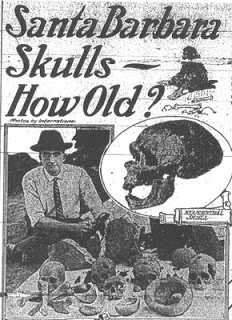
This is not an isolated find. There have been many large skeletons discovered in California that had Neanderthal-looking skulls. An example are the skulls found in the Burton Mound in Santa Barbara, California. www.nephilimgiants.net : Neanderthal Hybrids Uncovered Within Santa Barbara, California's Burton Mound


Boston Globe, June 25, 1922

Giant’s Graves in California

New Race of Men Dug Up, With Stone Implements Unlike Any Others

     Some of the skeletons are those of men measuring no less than 7 feet and perhaps more. Femur bones already sent to the University measure 21 inches in length.”

   “The skeletons represent a most astonishing race of people, who probably inhabited this country thousands of years ago,” said Mr. Steinberger. “Some of the skulls are large, with, high foreheads and well-rounded, while others are apelike, retreating from an inch above the frontal bone, with the top of the head flat and with but small space for brain activity.


Thursday, October 20, 2022

Smithsonian Anthropologists Call Giant Skulls from the Burton Mound in Santa Barbara, California "Gorilla Men."


Smithsonian Anthropologists Call Giant Skulls from the Burton Mound in Santa Barbara, California "Gorilla Men."

Giant Neanderthal Hybrids Found Within the Burton Mound in Santa Barbara, California by Smithsonian Scientists


Beetle browed skulls have been uncovered across North America. This newspaper article compared their find in the Burton Mound with Spy Neanderthal. More Neanderthal hybrids . The origins of the Neanderthal hybrids here www.nephilimgiants.net : 6 Foot Neanderthal Hybrids Uncovered in Nebraska


Washington Post October 25, 1923
Find Two Skeletons of Primitive Men
Beautiful Spearhead Beside Gorilla-like Skulls in California
     Santa BarbaraCalif.,   October 24, - Excavators, representing the Smithsonian Institution, today, uncovered two skeletons at the Burton Mound in this city, which the human records far back beyond the dawn of history on this continent, in the opinion of JP Harrington, in charge of the excavation.


    The skeletons were about 4 feet below the ancient ground surface. The bones of the bodies were all but disintegrated, but the skulls were well preserved. These show a type of man almost of gorilla order. The faces were long and the jaws massive, while the skull bones were most massive. The ridges over the brows are projecting and the forehead slants backward. Besides the first skeleton was a beautiful black obsidian spearhead four and a half inches long. Experts said the bones were those of a  race-long antedating native tribes in the vicinity when the Spaniards came.


Friday, June 18, 2021

Neanderthal Looking Skulls Uncovered in San Francisco California Shell Mound

  Neanderthal Looking Skulls Uncovered in San Francisco California Shell Mound 


Oakland Tribune, August 24, 1896

SEVEN SKELETONS 

Remarkable Discovery Made at Shell Mound

SKULLS RESEMBLING APES
   "An interesting discovery has been made at Shell Mound Park, where the skeleton of a prehistoric race of Indians was excavated. These skeletons are of a race unknown at present and are undoubtedly of great antiquity.
They were discovered in a shell mound on the west side of the racetrack. The mound is the usual kind, formed of shells, and is about ten feet high and 100 yards in length. Men were digging in the ground in order to investigate the soil when their spades struck against bones.
A skull was laid bare. The skull was of the most unusual formation and appearance. Professor John Merriam of the State University was immediately sent for and work was suspended until he arrived." 
      "Professor Merriam went to work himself and very carefully dug for the remains. In a short space of time three skeletons were discovered. The skeletons are of ordinary size and the most extra-ordinary characteristic about them is the shape of the skulls. They are more like the skulls of apes than human beings, and present a type of an unusually degraded and depraved race of Indians. There is little or no forehead and the lower part of the skull is shaped like an ape’s.
Professor Merriam declares he has never seen any skulls like these, although they bear a strong resemblance to the heads of the Flat Head Indians, former residents of the more northern coast.
   The skeletons are undoubted of great antiquity, as a careful study shows that they have laid beneath the mound for many hundreds of years. The mound itself is formed like other shell mounds. The peculiar race of Indians, who lived along the coast, camping on the very shore of the ocean, existed principally on shellfish. As soon as they devoured the fishes they probably threw the shells beside their campfire. As time went by, these piles grew into small mounds of various heights. The mound recently excavated is at least ten feet in height and at one time probably stood close to the waves of the ocean.
   That the skeletons were there before the mound was built is proved upon examination. The remains were found below the skulls and beneath strata of ashes. The ashes were undisturbed and formed a two-inch covering over the bones.
   The question now arises, how the ashes came there? The bodies were probably placed two or three inches below the surface and a covering of ashes above them as additional protection from the air, or it may have been that the ashes were thrown there in an entirely accidental manner, as the result of a campfire. The fact that the ashes were there however proves that the relics are ancient. Seven or eight skeletons have been taken out, but they are badly broken condition. They are in the possession of Prof. Merriam.

Monday, May 7, 2018

Strange Giant Skeletons Discovered in Wisconsin with Neanderthal Skulls

Strange Giant Skeletons Discovered in Wisconsin with Neanderthal Skulls


Strange skeletons of giants with skulls resembling those of a monkey have been discovered across North America.

New York Times, May 4, 1912
STRANGE SKELETONS FOUND
Indications That Tribe Hitherto Unknown Once Lived in Wisconsin

     Madison, Wisconsin, May 3 - The discovery of several skeletons of human beings while excavating a mound at Lake Delavan indicates that a heretofore unknown race of men once inhabited Southern Wisconsin.  Information of the discovery was brought to Madison today by Maurice Morrisey, of Delavan, who came here to attend a meeting of the Republican State Central Committee. Curator Charles E. Brown of the State Historical Museum will investigate the discoveries within a few days.

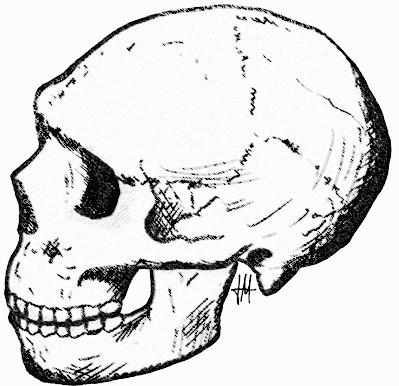
Many of these Neanderthal looking skulls were found in North America. Here is an account from California. More Neanderthal hybrids in California here 

Many of the 
New York Times, May 4, 1912 
Strange Skeletons Found
  A heretofore unknown race of men once inhabited Southern Wisconsin. The heads, presumably those of men, are much larger than the heads of any race which inhabit America today. From directly over the eye sockets, the head slopes straight back and the nasal bones protrude far above the cheek bones. The jaw bones are long and pointed, bearing a minute resemblance to the head of the monkey. The teeth in the front of the jaw are regular molars. There were also found in the mounds the skeletons, presumably of women, which had smaller heads, but were similar in facial characteristics.”

Thursday, June 21, 2012

Giant Humans with Primitive Neanderthal Skulls Found in Wales


Giant Humans with Primitive Neanderthal Skulls Found in Wales


This type of "primitive" skull type has been found across the northern latitudes associated with the Maritime Archaic.  One of the burial rituals that is found within these primitive giants was the use of red ochre. For an archeological report where this type fo skull was found  
www.nephilimgiants.net : Giant Neanderthal Hybrids of Northern Europe and North America 


Phoenician Origins of Britons and Scots, 1925


   And it was presumably early pioneer stragglers of this same Nordic race at the end of the Old Stone Age who are represented by the "Red Man" of Paviland Cave, in the Gower peninsula of Wales, of the mammoth age, and the "Kneiss Chief " in the stone cist at Keiss (Kassi?) in Caithness. Both of these are interred with rude stone weapons and are of the superior and artistic Cro-Magnon type of early men, which seems to have been the proto-Nordic or proto-Aryan. Indeed, the association of the Keiss chief had a cranium described by Huxley: The Keiss chief is described by Laing as "tall man of very massive proportions", lying extended with face to the East. Huxley found his cranial index was 76, with projecting eyebrow ridges which gave the forehead a "receding" aspect and the forehead "low and narrow."      


                                          Giant Human Remains From The British Isles and Europe


Thursday, July 28, 2011

Dolman Found in Illinois Burial Mound Along With Neanderthal Type Skulls

Dolman Found in Illinois Burial Mound Along with Neanderthal Type Skulls


Dolman from Jordan in the Middle East. Other structures found in Illinois are very similar to what would have been found in the Babylonian territories. One of the most amazing are the ancient canals. www.nephilimgiants.net : Babylonian Amorite's Canals and Dolmans Described Along the Rock River in Illinois


 "History of Whiteside County, Illinois," 1877,  

Investigation of the Sinnissippi Mounds 

Sinnissippi Mounds 


"...In May 1877, Mr. Holbrook examined a number of mounds above the Catholic cemetery, in the vicinity of Sterling, one of which was a large mound, one of a number in a row parallel with the river. On moving the clay it was found that this mound contained a Dolmen built of flat pieces of fossiliferous limestone. The stones used were quite large.
The wall was a right-angled parallelogram, twelve feet long and five wide, the foundation laid upon clay, the wall built in an artistic manner, no cement having been used. The inner surface was smooth and even, although the stones were unhewn. The inside of the Dolmen revealed fragments of eight skeletons, the bones badly decomposed. Apparently the bodies were cast into the sepulcher promiscuously. The skulls found indicated that this people were acquainted with the division of surgery known as "trepanning" -- i.e., removing portions of the bones of the skull, or portions of other bones. A thigh bone that had been fractured was found replaced and united in a manner that would do honor to a surgeon of the present day. With the skulls were found a plummet, fossils which are not found in this locality, finely black polished pebbles, and a number of large teeth. In another mound was found an altar of burned rock, oval in shape, long diameter six feet, short diameter four and a half feet. The altar was of fossiliferous limestone. Over the mounds were found a vegetable growth of from one to ten feet and a decayed stump of a hickory tree, about twelve inches in diameter. On and about the altars were usually found charcoal and charred remains of human beings; also evidence of great and continued heat. At Sterling the indications are that the body was placed upon the clay, covered with black loam and a great fire built over the whole. After the fire the mound was raised. This is indicated by the thick strata of charcoal and ashes found. As a rule the remains unearthed furnish unsatisfactory evidence. Great numbers of perfect molar teeth are exhumed, thus certifying that prehistoric man was unacquainted with the pangs of the toothache. In the Sterling mounds were found stone scrapers, but very rude in design and execution. Fragments of pottery were found, also implements made from the antlers of the elk and deer. At Sterling is a work that many judges pronounce a fortress. The two embankments are parallel, four rods apart, direction east and west. The south embankment has two gateways. The north embankment is sixteen rods long and has two gateways. The construction indicates knowledge of the cardinal points of the compass. This people evidently had a practical acquaintance with astronomy, as the North Star appears to have been a governing point with them.
    "The Mound Builders wore cloth, and dressed the hides of animals, carved rude ornaments and engraved characters upon stone; ate food from earthen dishes, and worshiped at altars erected upon high hills and in low valleys. There is abundant reason for believing that human sacrifice was common with them. Trepanned skulls are frequently met with on opening mounds, evidence being presented that the operation was made prior to death. The superstition of the Mound Builders seems analogous to that of the South Sea Islanders and tribes of savages of the present day who trepan for vertigo, neuralgia, etc., believing that these complaints are demons in the head that should be let out. Metal was worked in an imperfect manner by the people. Galena was a prominent ornament. Mr. J. M. Williamson, of Ustick, says these charms are found in the northwestern part of the county. Copper was apparently the king of metals among the Mound Builders. Anatomically considered the Mound Builders were no larger nor stronger than the men of the present day. Their skulls differ widely from the Indian or Caucasian and have been thus described: "The frontal bone recedes backwards from a prominent superciliary ridge, leaving no forehead, or rather the eye looks out from under the frontal plate, very similar to a turtle shell, and no more elevated." Their jaws were protruding, prominent and wide. The evidence is that the Mound Builders were a half civilized agricultural people, prominently differing from the Indians in manner of burial and habits of life..."