Showing posts with label Lake Superior. Show all posts

Sunday, November 26, 2023

Six Ton Piece of Copper is Raised out of a Lake Superior Mine: Evidence of Mediterranean Copper Mining


Six Ton Piece of Copper is Raised out of a Lake Superior Mine: Evidence of Mediterranean Copper Mining


Bancroft's Native Races, Vol. IV 1882

Six Ton Piece of Copper being raised from a mine on Lake Superior.  They were not mining such large amounts of copper to make jewelry!  Where did thsis copper go? To the Babylon Amorites www.nephilimgiants.net : Babylonian Weapons Technology in the Great Lakes

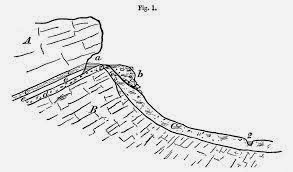
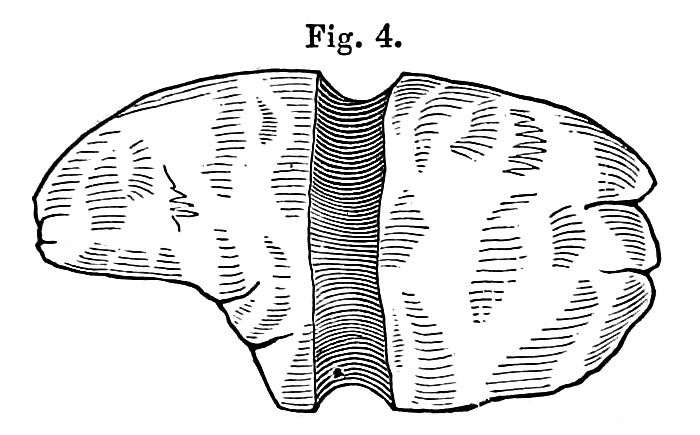
   The ancient miners have left numerous traces of their work in the region of Lake Superior. At one place a piece of pure copper weighing over five tons was found fifteen feet below the surface, under trees at least four hundred years old. It had been raised on skids, bore marks of fire, and some stone implements were scattered about. There is no evidence that the tribes found in possession of the country by the first French missionaries ever worked these mines, or had any tradition of a people that had worked them, although both they and their ancestors had copper knives hammered from lumps of the metal, which are very commonly found on the surface. All the traditions and Indian stories of 'mines' may most consistently be referred to these natural superficial deposits. The ancient mines were for the most part in the same localities where the best modern mines are worked. Most of them have left as traces only slight depressions in the surface, the finding of which is regarded by prospectors as a tolerably sure indication of a rich vein of copper. The cut represents a section of one of the veins of copper-bearing rock worked by the ancient miners. The mass of copper at a weighed about six tons. At the top a portion of the stone had been left across the vein as support. Copper implements, including wedges used in mining as 'gads,' are found in and about the old mines; with hammers of stone, mostly grooved for withe handles. Some weigh from thirty to forty pounds and have two 784grooves; others again are not grooved at all. In one case remains of a handle of twisted cedar-roots were found, and much-worn wooden shovels often occur. There are no enclosures, mounds, or other traces of a permanent settlement of the Mound-builders in the mining region. It is probable that the miners came each summer from the south; in fact, it would have been impossible to work the mines in winter by their methods.


Thursday, December 6, 2012

Nephilim Remains Discovered in Alaska: Evidence Reveals Possible Location of the Biblical Ophir


Amorite Nephilim Giants Remains Discovered in Alaska 


Evidence Reveals Possible Location of the Biblical Ophir


     Know one has ever produced conclusive proof of the location of Ophir.  In a recent find of giant human skeletons that were uncovered in Alaska with weapons made from Lake Superior Copper, the idea of an eastern trade route from the Red Sea to India to the Bering Strait seemed very possible.  


       Also interesting from this newspaper article was the location of the find in Alaskan "Gold District." Found with the skeletons were rings which are usually not found with Native American burials.  Also found with the large skeletons were weapons with sockets.  This type of weapons technology has its origins in the Middle East, where it was discovered around 1500 B.C.


 Five skeletons, nearly complete, were exhumed and each is the set of bones that belonged to a giant of prehistoric times. One of the skeletons measured over seven feet in length, so that the man must have been considerably over that height. Then there were two others of within an inch of seven feet and the remaining two “were more than six feet in length and the men were of a gigantic frame."
  
 The altitude Is high and the ground was half frozen, S0 that the bones were preserved almost intact Perkinson says that .he expect if they had kept on digging they would have found many more, as these were lying comparatively close together.  The bones of the fingers and toes bad crumbled away, but the linger of one skeleton hand was sufficiently •strong to hold a ring of what appears to be lead or some similar base, metal. 


     The skeletons were unusually well formed, but one unique feature was that the arms were several inches shorter than ordinarily appears, while the size of. the bones of the forearm were enormous in comparison to the usual models, 


      Beside two of the skeletons were spears, rudely shaped with a soft metal and pointed with sharp stones. The spears were only about three feet long and five’ Inches thick at the top. tapering at the lower end. The top contained a socket into which a wooden shaft was probably placed, in order to wield the big piece of metal. Other pieces of stone and carved metal were found."


The use of sockets on weapons can date this find to sometime after 1500 B.C. This is the date when the socket replaced the tanged daggers and spearheads. This may be evidence that the Amorite metal traders from the Levant were looking to ship copper and back to Israel for King Solomon via the Bering Strait- China- India to the Red Sea.


                             Type of Phoenician Amorite ship that would have been sent to Ophir.


Ophir was visited by the fleet of Solomon and the Phoenicians. Solomon's navy traveled to Ophir, taking "four hundred and twenty talents of gold from there" 1 Kin. 9:26-28


 His tarshish fleet sailed down the Red Sea and spent part of three years to make the trip.


On their return, after a three years' absence, they reported that they had sailed to a country named Ophir, and produced in support of their statement a freight well calculated to convince the most sceptical, consisting as it did of four hundred and twenty talents of gold. The success of this first venture encouraged Solomon to persevere in such expeditions: he sent his fleet on several voyages to Ophir, and procured from thence a rich harvest of gold and silver, wood and ivory, apes and peacocks.*
* 1 Kings ix. 26-28, x. 11, 12; cf. 2 Citron, viii. 17, 18, ix. 10, 11, 21. A whole library might be stocked with the various treatises which have appeared on the situation of the country of Ophir: Arabia, Persia, India, Java, and America have all been suggested. The mention of almug wood and of peacocks, which may be of Indian origin,.
So, we have Amorite metal traders in the Gold district of Alaska. Taking this eastern route from the Red Sea to Alaska,f gold and silver, wood and ivory, apes and peacocks could be found in route.


Friday, February 17, 2012

Babylonian Weapons Technology in the Great Lakes


Babylonian Weapons Technology in the Great Lakes


   Babylonian -Amorite Weapons technology in Wisconsin and Minnesota is the result of the search for copper and tin for the emerging Bronze Age. The Amorites, who were the accounted giants in the Bible had seized Babylon in 1950 B.C..  The Amorite  weapons technology and giant human skeletal remains have left a trail  of evidence from the Biblical Levant to The British Isles where they mined tin, to the northern shores of Lake Superior where they mined copper.  The mystery of the Copper Culture in the Great Lakes region is solved by comparing their weapons with those being manufactured by the Babylonians for the Hittiite, Egyptian and Hebrew armies.

   These ancient Babylonian weapons can be closely affiliated with the giant human skeletons that are found in the greatest numbers in the Levant, the British Isles and the Ohio Valley.

Friday, July 29, 2011

Ancient Mining of Copper on Lake Superior

LAKE SUPERIOR,ANCIENT MINING WORKS.


One remarkable mining excavation of the Mound-Builders was found near the Waterbury mine. DNa was done on the skeletal remains to find Haplo X which is the DNA of ther ancient giant tribe called the Amorites who lived in the Biblcial Levant and controlled zbabylon from 2000 BC - 1600 BC  More here Mysteries of Ancient America Books: Nephilim DNA Found at Their Copper Mines at Isle Royale


Remains of their mining works were first discovered in 1848 by Mr. S. O. Knapp, agent of the Minnesota Mining Company, and in 1849 they were described by Dr. Charles T. Jackson, in his geological report to the national government. Those described were found at the Minnesota mine, in upper Michigan, near Lake Superior. Their mining was chiefly surface work; that is to say, they worked the surface of the veins in open pits and trenches. At the Minnesota mine, the greatest depth of their excavations was thirty feet; and here, “not far below the bottom of a trough-like cavity, among a mass of leaves, sticks, and water, Mr. Knapp discovered a de
tached mass of copper weighing nearly six tons. It lay upon a cob-work of round logs or skids six or eight inches in diameter, the ends of which showed plainly the marks of a small axe or cutting tool about two and a half inches wide. They soon shriveled and decayed when exposed to the air. The mass of copper had been raised several feet, along the foot of the lode, on timbers, by means of wedges.” At this place was found a stone maul weighing thirty-six pounds, and also a copper maul or sledge weighing twenty-five pounds. Old trees showing 395 rings of annual growth stood in the débris, and “the fallen and decayed trunks of trees of a former generation were seen lying across the pits.”  (opposite) presents a section of this mining shaft of the Mound-Builders: a shows the mass of copper; b the bottom of the shaft; c the earth and débris which had been thrown out. The dark spots are masses of copper.


Modern mining on Lake Superior began effectively in 1845. The whole copper region has not been fully explored. Works of the ancient miners are found at all the mines of any importance; and they show remarkable skill in discovering and tracing actual veins of the metal. Colonel Charles Whittlesey, one of the best authorities on this point, believes the Mound-Builders worked the copper-beds of that region during “a great length of time,” and more of their works will undoubtedly be explored when the forests shall be cleared away from those portions of the copper region not yet worked by modern miners. So far as they have been traced, they every where show the same methods, the same implements, and the same peculiarities of both knowledge and lack of knowledge in the old miners.