Showing posts with label Smithsonian Institute. Show all posts

Monday, December 19, 2022

Hebrew/Phoenician Script Discovered in a Tennessee Burial Mound by the Smithsonian Institute


 Hebrew/Phoenician Script Discovered in a Tennessee Burial Mound


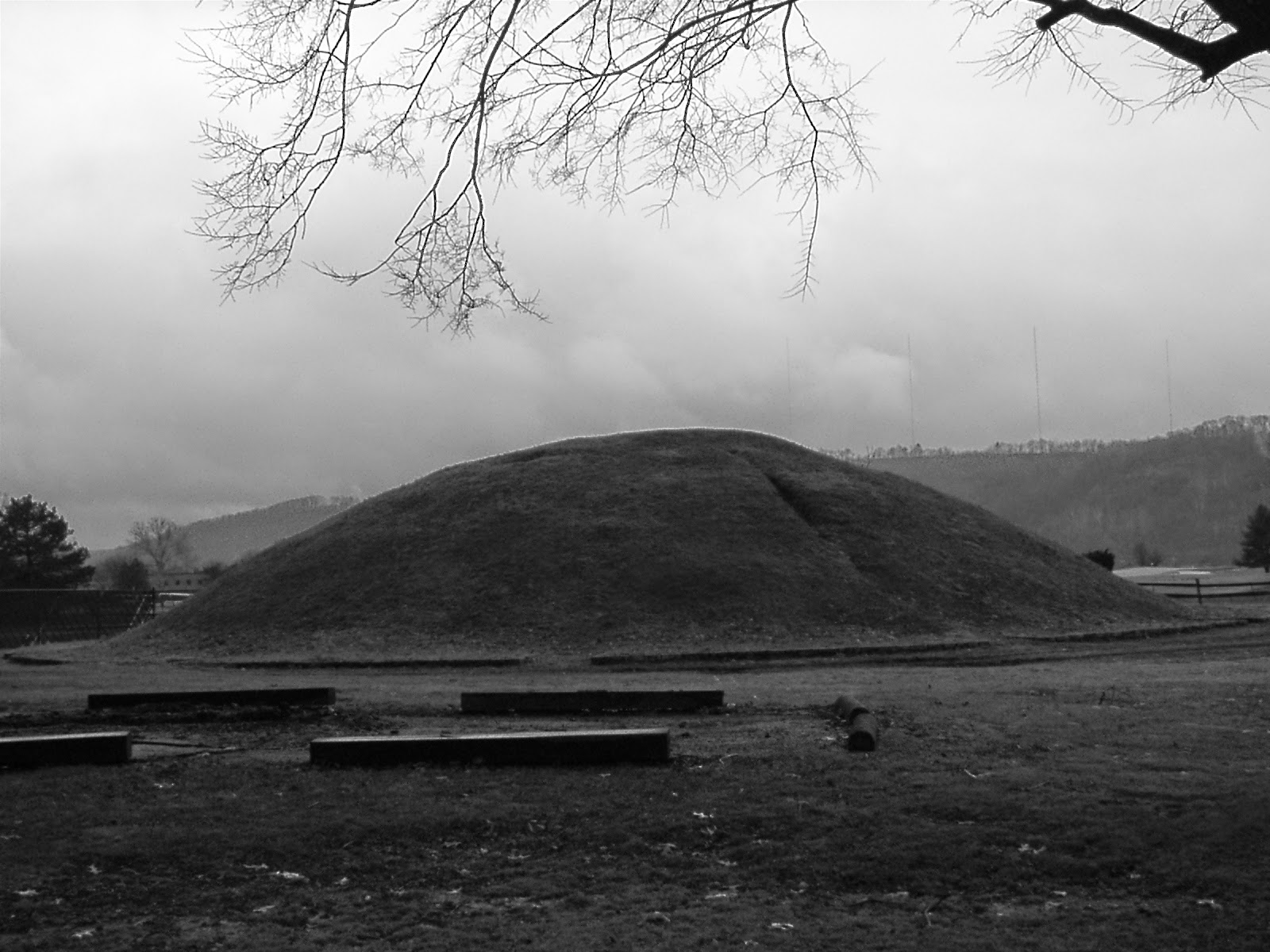
 Excavation of a burial mound in Loudon County, Tennessee, in 1889 by the Smithsonian Bureau of Ethnology's Mound Survey, directed by Cyrus Thomas, yielded what is known as the Bat Creek Stone.  Thomas was adamant that the burial mounds were of Native American origin. Anything that contradicted this theory was destroyed (giant skeletons).  After the stone was discovered, Thomas declared it to be Cherokee script. Had anyone at the time of its discovery hinted that it might be Hebrew, it would have been destroyed.   Discover the Amorites as the builders of the Ohio burial mounds, with mounds, earthworks and skull typeswww.nephilimgiants.net : Origins of the Giants of the Ohio Valley Mound Builders Revealed . 

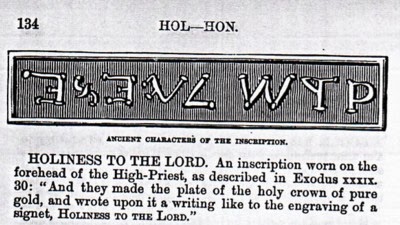
In the 1960s, Henriette Mertz and Corey Ayoob realized that the Bat Creek Stone was an ancient Phoenician or Semitic. The Paleo-Hebrew dates to about the first or second century A.D. The five letters  read, from right to left, LYHWD, or "for Judea," or "for the Judeans." 


 They made the plate, the sacred emblem, out of pure gold and engraved on it, like an inscription on a seal: holy to the Lord. 31 Then they fastened a blue cord to it to attach it to the turban, as the Lord commanded Moses.


Sunday, October 30, 2022

Smithsonian Scientists Describe Large Skeletons with Double Rows of Teeth from a Burial Mound on Amelia Island, Florida

 Smithsonian Scientists Describe Large Skeletons with Double Rows of Teeth from a Burial Mound on Amelia Island, Florida


For more cases of giants with double rows of teeth they are in my "Nephilim" blog here's onewww.nephilimgiants.net : Giant Skeleton With Double Rows of Teeth Uncovered in Syracuse, New York

"Crania found in this mound appears to differ somewhat from that of the present Indians."


Annual Report of the Board of Regents of the Smithsonian Institution 1874
Antiquities of Florida, by Augustus Mitchell, M.D., of St. Mary’s, Georgia 

     While in the South during the winter of 1848, pursuing the study and collecting specimens of ornithology, I was impelled by curiosity to examine a mound of moderate size situated on the southern portion of Amelia Island, Florida, being kindly furnished with colored laborers, and aided by Dr. R. Harrison.
    This mound was about 15 feet in height, and 30 feet in diameter at the base, flattened and worn by attrition for ages; there having been two growths of live oak upon it, as stated by an old Spanish inhabitant of the place. The soil composing the mound was of a light sandy, yellowish loam.
    We commenced the examination by cutting a trench 4 feet wide directly through the center, from the apex to the base, and then another trench at right angles to the former. The excavation revealed a number of relics, and the mode of burial of the mound builders. They must have commenced by digging into the surface of the ground about 2 feet, then, partially filling the excavation with oyster shells, they placed their dead on these in a sitting posture, their legs bent under them, with their faces to the east, and their arms crossed upon the breast, and next spread over them a stratum of earth…
The confirmation of the crania found in this mound appears to differ somewhat from that of the present Indians…
     The teeth of many crania of this mound were, without exceptions, in a perfect state of preservation, the vitrified enamel of these organs being capable of resisting exposure for centuries… Not one carious tooth was found among the hundreds in the mound. Many were entire in the lower jaw, the whole compactly and firmly set. In some the second set was observed, while one jaw had evident signs of a third set, a nucleus of a tooth being seen beneath the neck of a tooth of a very old jaw…
    Pursuing my investigations and excavating farther toward the southeast face of the mound, I came upon the largest sized stone ax I have ever seen or that had ever been found in that section of the country. Close to it was the largest and most perfect cranium of the mound, not crushed by pressure of the earth, complete in its form, quite dry, and no sand in its cavity… contiguous to this was nearly a quart of red ochre, and quite the same quantity of what seemed to be pulverized charcoal, as materials of war paint. Anticipating a perfect specimen in this skull, I was doomed to disappointment, for, after taking it out of the earth and setting it up so that I could view the fleshless face of this gigantic savage, in the space of two hours it crumbled to pieces, except small portions. According to the measurements of the bones of this skeleton its height must have been quite seven feet.

   Coal was freely diffused throughout the mound, which contained but little pottery. Two stone hatchets were found, and a small stone ax, in addition to the large one described. This instrument bore evident marks of fire.
   There is one large mound around on the eastern end of Amelia Island, Florida, and two mounds on the central portion of Cumberland Island, Georgia, likewise, most of the Islands on that coast, from which could be obtained large collections of materials for the advancement of ethnological science.”


Friday, February 12, 2021

Eight Foot Neanderthal-Hybrid Giant Discovered In Missouri. Sent to the Smithsonian Where it has Disappeared.


Eight Foot Neanderthal-Hybrid Giant Discovered In Missouri. Sent to the Smithsonian Where it has Disappeared.

Is this a Nephilim Giant?


June 15, 1933, Steelville Ledger
Strange Discovery Made by a Boy Looking for Arrowheads, Gives This Missouri Town an Absorbing Mystery to Ponder.


   This quiet little summer resort town of the Ozarks has just come to grips with an absorbing mystery of a sort it has never before been called upon to solve. It all came about as a result of Billy Harman's hunt for arrowheads a few weeks ago.
   Poking about in Puckett's Cave in a Meramec River bluff some 10 miles northeast of here, young Harman reached for something white in a hole in the ground and, to his vast amazement came up with a handful of human bones. Soundly startled, the 16-year-old lad put them down and dashed for home. Then, after gathering his courage and some reinforcements, he went back and proceeded to dig on the site of his discovery. From the ancient accumulation of ash and limestone debris, he turned up the complete skeleton of an 8-foot giant. The grisly find was brought to Dr. R. C. Parker here and stretched out to its enormous length in a hallway of his office where it has since remained the most startling exhibit Steelville has ever had on public view. People have come from far and near to examine it and fire a broadside of questions at the harassed doctor.
    Who was this giant? When did he live? To what race did he belong? Was he simply a freak among people of normal stature, or did he belong, possibly, to some extinct race of stone-age giants who roamed over these hills before the coming of the Indian? What was the manner of his death? Did he come to his end from natural causes or does that lone arrowhead found among the bones tell its own story of violence? Was he, perhaps, an Ozark Goliath brought down by some David of the Missouri hill country who used a bow and arrow instead of a sling?
   If anybody can answer these questions he is pretty likely to find a warm welcome in Steelville, especially at the hands of Dr. Parker. Anthropologists are scarce hereabouts and the doctor's fund of information about such things was exhausted in the first 20 minutes. An appeal to Dr. Ales Hrdlicka, an anthropologist of the National Museum in Washington and celebrated authority on primitive races is expected to help. Dr. Parker has written to him, offering to forward the skull or the whole skeleton, if necessary, for scientific study.
   Meanwhile, speculation is proceeding at a lively rate. The consensus of local opinion is that these prodigious bones are the remains of an Indian--maybe and Osage since the Osages inhabited this region a century or so ago--but in any case a chief. For it is argued, a man of such gigantic stature must have been a chief among any primitive people. The skeleton itself is seven and a half feet long without the cartilage layers that once separated the vertebrae, and with some of the bones of the feet missing, Dr. Parker believes the man must have been close to eight feet tall in life, but was apparently of slender build, for the bones are not of extraordinary size except as to length. His slenderness, too, must have been accentuated in appearance, at least, by the extremely small size of his head. With all his magnificent stature, this primitive chief, if chief he was, really was something of a pinhead. The skull measures only 20 inches in circumference--a pretty small skull, even for a man of normal height. The heads of most average-sized men measure from 22 to 28 inches in circumference. A 20-inch dome perched on the shoulders of a giant eight feet tall must have looked tiny indeed.
   His brow, too, was anything but noble. The height of the forehead, once popularly believed to be a sort of hallmark of high or low intelligence, has been largely discredited as such an indicator now, so this cave man's sloping brow may not necessarily be regarded as a stamp of low mentality. But it may be set down, anyway, as one of the cranial characteristics which fit very neatly into the general "pinhead" picture. Of course, he had considerably more above the eyes and ears than such extremely primitive types as the Peking man, Piltdown man, and the Neanderthaloid.
   But he did have a low brow, and what is probably more significant, a very narrow one. His jaw, too, while not of the prognathous type characteristic of the most ancient men, was somewhat heavier than that of the average man of today.
    As to his age at the time of his death, there is only the condition of the teeth to serve as an indicator. The fact that most of them were still doing service would argue that he had not attained an advanced age and the fact that the molars were considerably worn would indicate he was no longer a stripling.
The cave in which the skeleton was brought to light is not essentially different from hundreds of other caves to be found in the limestone bluffs of the Ozark country, except that it is easily accessible both from above and below. Many of these Ozark caves are not. The entrance is about 100 feet above the river valley and may be reached by a stiff climb from below or by means of a narrow limestone ledge that runs around the face of the cliff from above. John Pucket of Steelville, who was born and raised in the vicinity, and who owns the cave, says he has known for 50 years that it was once inhabited, for its floor at the entrance is covered with an ash and charcoal accumulation, two or three feet deep. As a boy he was accustomed to hunting for Indian relics in the place and in later years used it as a livestock shelter. As the cave faces east, with a bluff and a heavy forest to protect it from winter winds on the west and north, it makes a capital shelter for livestock--and for the same reason it made a capital dwelling for early races of human beings.
   A corner in the north wall, just within the entrance formed the giant's tomb. The body apparently had been placed in a kneeling position in a shallow grave dug in this niche and covered over with about two feet of soil and debris scooped up from the floor of the cave. The skull, when found, lay face down. Whether the man inhabited the cave in life or took up his abode there only after death, is a question which, like a good many others concerning him, has not been satisfactorily answered. In either case, it is evident that the cave had served as a human dwelling place long before his burial, for mixed with the ash and limestone debris, both above and below the skeleton, were numerous fragments of crude clay pottery--the dish breakage of several generations maybe. Apparently, the cave dwellers did not bother about such housekeeping details as sweeping out broken dishes.
   There were other things besides pottery fragments in the grave, too. Whether they were placed there with the body or were merely part of the cave rubbish with which the grave was filled is problematic. But here is the list: two stone awls or drills, two to three inches long; three small bird arrowheads, one of them neatly serrated; one larger arrowhead which might possibly have been the cause of the giant's death; a thin oval piece of polished shell roughly the size of a quarter; a segment of bone an eighth of an inch in diameter and half an inch long, polished and hollowed out for stringing; and a 2 ½ inch fragment of a canine tooth or fang, possibly the fang of a saber-toothed tiger of prehistoric origin. It is slightly curved and broken off perhaps an inch from the point. If it is the fang of a saber-toothed tiger, its presence in the cave would not necessarily mean, of course, that the buried cave dweller was a contemporary of this animal, now long extinct.
    As to the age of the skeleton, estimates are loose and highly variable. They range all the way from 100 to 2000 years. Just now it appears that one man's guess is as good as another's, but the weight of evidence seems to be on the side of the higher estimate. For a good many years, now, scientists have uncovered evidence that the Ozark region once was inhabited by a primitive race of cave-dwelling savages long antedating the Indian. They lived in caverns in limestone bluffs--caverns similar to Puckett's Cave--and led what appears to have been a lowly existence.
   Some 13 years ago, Gerard Fowke, field explorer of the Bureau of Ethnology, Smithsonian Institution, spent several months investigating these cave-dweller remains. He visited hundreds of caves and found, in some, evidence of continuous habitation over a period of 1000 to 2000 years, his estimate is based principally on the depth of ash accumulations from campfires. One of his most asked that the giant of Puckett's Cave may have been one of these prehistoric bluff dwellers. Astonishing discoveries were evidence that these aborigines were cannibals, for along with the bones of animals, which they had used for food, he found also human bones, which had been cracked for the extraction of the marrow they contained. These people, he believed lived at least 1000 years ago.

In another article, it states that this skeleton was boxed up and sent to the Smithsonian Institution by Dr. Parker. So, where is it now???

Get the rest of the story here.  Get my discounted price on EBay


Wednesday, February 3, 2021

Smithsonian Reports Two Skeletons as "Very Large" from a South Charleston, West Virginia Burial Mound


Smithsonian Reports Two Skeletons as "Very Large" from a South Charleston, West Virginia Burial Mound

Twelfth annual report of the Bureau of Ethnology to the Secretary of the Smithsonian Institution, 1890-91


Mound 31, where two skeletons described by Smithsonian scientists as "very large" were interred facing each other. Photo from "The Nephilim Chronicles: A Travel Guide to the Ancient Ruins in the Ohio Valley, Zimmerman, 2010.   More giant skeletons in West Virginia www.nephilimgiants.net : Large Skeleton Found in Huntington West Virginia Burial Mound

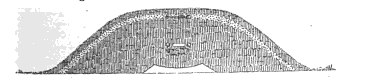
Mound 31 of this group seems to furnish a connecting link between the West Virginia and the Ohio mounds. It is sharp in outline, has a steep slope, and is flattened on the top; is 318 feet in circumference at the base and about 25 feet high. It was opened by digging a shaft 10 feet in diameter from the center of the' top to the base. After passing through the top layer of surface soil, some 2 feet thick, a layer of clay and ashes 1 foot thick was encountered. Here, near the center of the shaft, were two skeletons, lying horizontally, one immediately over the other, the upper and larger one with the face down, and the lower with the face-up. There were no indications of fire about them.


    Immediately over the heads were one celt and three lance-heads. At the depth of 13 feet and a little north of the center of the mound were two very large skeletons, in a sitting posture, with their extended legs interlocked to the knees. Their arms were extended and their hands slightly elevated, as if together holding up a sandstone mortar which was between their faces. This stone is somewhat hemispherical, about 2 feet in diameter across the top, which is hollowed in the shape of a shallow basin or mortar. It had been subjected to the action of fire until burned to a bright red. The cavity was filled with white ashes, containing small fragments of bones burned to cinders. Immediately over this, and of sufficient size to cover it, was a slab of bluish-gray limestone about 3 inches thick, which had small cup-shaped excavations on the underside. This bore no marks of fire. Near the hands of the eastern skeleton were a small hematite celt and a lance-head, and upon the left wrist of the other two copper bracelets. At the depth of 25 feet, and ou the natural surface was found what in an Ohio mound would have been designated an " altar." This was not thoroughly traced throughout, but was about 12 feet long and over 8 feet wide, of the form shown in Fig. 24.


Saturday, January 11, 2020

Neanderthal Skulls Discovered in Kansas and Photographed by the Smithsonian Institute

Neanderthal Skulls Discovered in Kansas and Photographed by the Smithsonian Institute

 In "The Encyclopedia of Ancient Giants in North America" I chronicle numerous discoveries of Neanderthal hybrids, many of these were of giant's stature. They were unearthed in 23 States, with most of the finds in Coastal and the Great Lakes region, but with some exceptions in states like Nebraska. Experts from the Smithsonian claimed they resembled Neanderthal. They were found in both subsurface burials along within burial mounds. In the 1907 Geological Survey of Nebraska, it stated, "They are higher in human scale than Neanderthal man, but lower than the mound builder." Many of the skulls found within burial mounds across the continent also had this Archaic type of skull. "According to archaeologists and their Berengia theory, they can't date earlier than 10,000 B.C.  So, Mr. Archaeologists, just what Native American people were Neanderthal looking 12,000 years ago, or earlier?     


Lincoln Daily Star, November 10, 1913
Rare Collection to Medical School
Three Skulls Given to University Branch by Dr. Gilder
Types of Three Races Shown by Relics Found in Nebraska Mounds
(Special to the Star)

   Omaha Neb., Nov. 29 – A series of three prehistoric skulls, estimated as ranging from 100 years to at least 20,000 in age, and representing the three races of mankind, which ave lived in the great Missouri Valley since the advent of the human race upon this continent, has just been presented to the new medical college of the University of Nebraska by Dr. R. F. Gilder of Omaha, archaeologist in the field for the university,
   The oldest skull is technically known as “Nebraska Loess Man, No. 8,” and is the eighth skull removed from the burial mound known as the “Long Mound.” this mound is located a few miles above Omaha and from the huge grave, Dr. Gilder removed twelve skulls, all of order so low as to be scarcely above the ape in intelligence. The scientist made a careful and minute examination and declared that this skull had never been disturbed by man, but had been deposited by nature when the hills were made. Geologists declared that this had taken place at least 20,000 years ago and that the age of this people could not be less than that number of years. More Neanderthal typoe skeletons were discovered in Missouri here is another. More on Neandrthal skulls  https://nephilimgiantsinnorthamerica.blogspot.com/2020/07/seven-historical-accounts-of-giant.html

Photo from the Smithsonian of skull number 8.

Number 8” had almost no forehead at all. There is a superciliary ridge over each eye as pronounced as the flange of a car wheel, while the back of this ridge the skull slopes to the rear of the head. Nature did not fit this man to be the head of a modern trust company, but he was provided with a head and skull that would shed missiles like a duck's back turns raindrops. The skulls from this mound have been subject of much interest to archaeologists all over the world and savants from France, Germany, and several other countries have journeyed all the way to Omaha especially to see and study them. Universities in all parts of the world have asked for casts and replicas.

Smithsonian Bureau of American Ethnology, Bulletin 33, 1907