Tuesday, February 16, 2021

Large Skeleton Uncovered in Meigs County, Ohio Burial Mound


 Large Skeleton Uncovered in Meigs County, Ohio Burial Mound


Pioneer History of Meigs County, Ohio, 1908
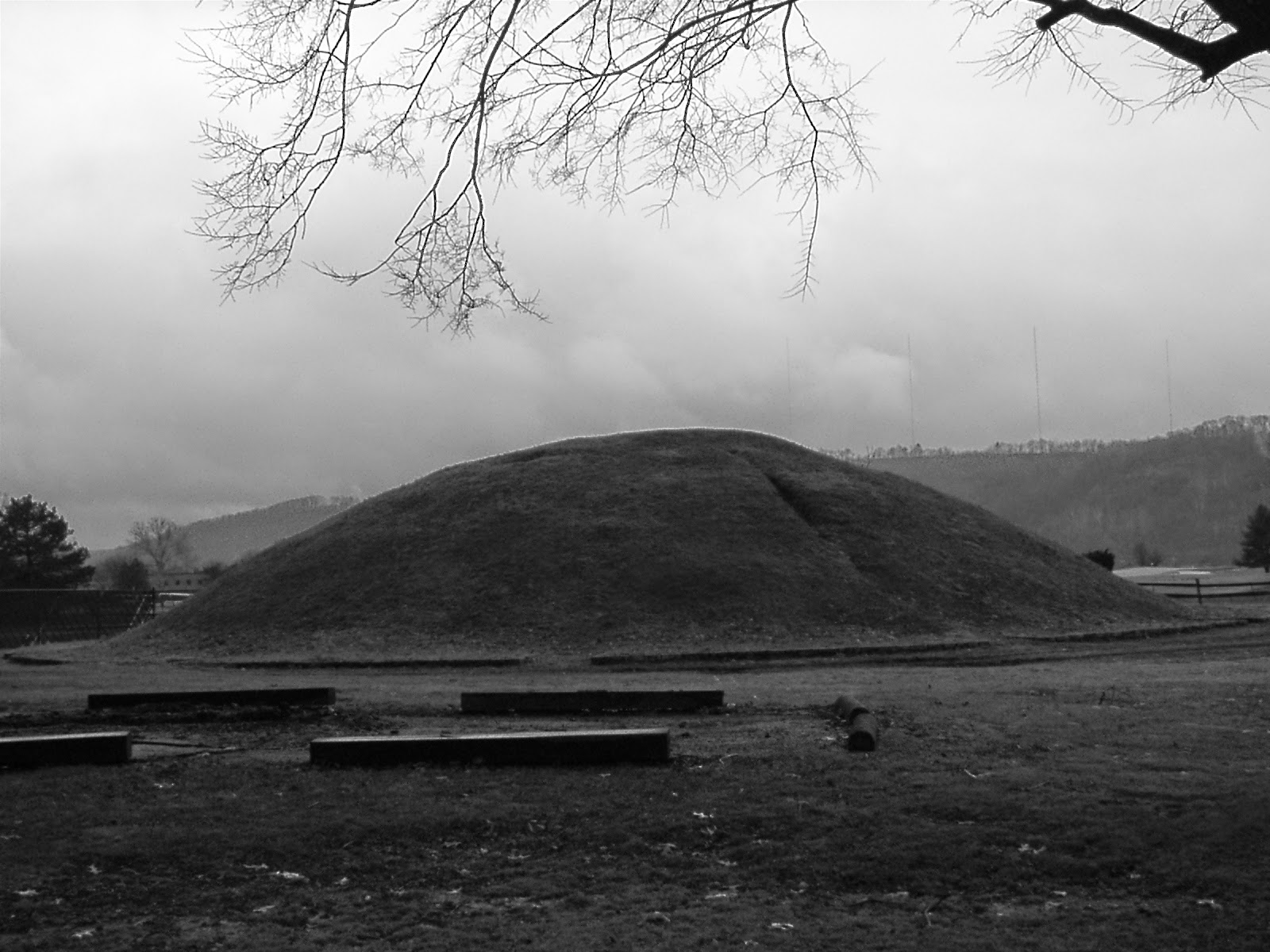
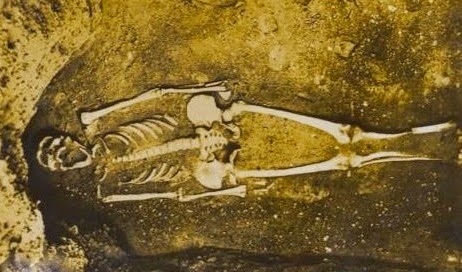
 Rutland, the township was a large burial mound on a hill near the center of section 7. It was twelve feet high, and the bones of a very large man were found there.More giant skeletons discovered in Ohio

                    Get directions to this mound in Meigs, County, Ohio, and 221 more

Monday, February 15, 2021

8 Foot Giant Human Giant Uncovered Near the Portsmouth, Ohio Earthworks


8 Foot Giant Human Giant Uncovered Near the Portsmouth, Ohio Earthworks


Burial mound that was part of the Portsmouth, Ohio earthworks that extended across the Ohio River into Kentucky. Several giant skeletons have been uncovered around these earthworks


San Francisco Morning Call, October 1, 1894

The Skeleton of a Human Giant. 
Portsmouth, Ohio, Sept. 30.-The skeleton of a prehistoric giant has been exhumed in Kentucky, twelve miles below this city. The skeleton is 8 feet in height and 4 feet across the shoulders."More on Kentucky's giants

Friday, February 12, 2021

Amorites Giants Struggle for Ascendancy of Babylon

 Amorites Giants  Struggle for Ascendancy of Babylon


    Sun worship came into prominence in its most fully developed form during the obscure period which followed the decline of the Dynasty of Isin. This was probably due to the changed political conditions which brought about the ascendancy for a time of Larsa, the seat of the Sumerian sun cult, and of Sippar, the seat of the Akkadian sun cult. Larsa was selected as the capital of the Elamite conquerors, while their rivals, the Amorites, appear to have first established their power at Sippar.
Babbar, the sun god of Sippar, whose Semitic name was Shamash, must have been credited with the early successes of the Amorites, who became domiciled under his care, and it was possibly on that account that the ruling family subsequently devoted so much attention to his worship in Merodach's city of Babylon, where a sun temple was erected, and Shamash received devout recognition as an abstract deity of righteousness and law, who reflected the ideals of well organized and firmly governed communities.
      The first Amoritic king was Sumu-abum, but little is known regarding him except that he reigned at Sippar. He was succeeded by Sumu-la-ilu, a deified monarch, who moved from Sippar to Babylon, the great wall of which he either repaired or entirely reconstructed in his fifth year. With these two monarchs began the brilliant Hammurabi, or First Dynasty of Babylonia, which endured for three centuries. Except Sumu-abum, who seems to stand alone, all its kings belonged to the same family, and son succeeded father in unbroken succession.
     Sumu-la-ilu was evidently a great general and conqueror of the type of Thothmes III of Egypt. His empire, it is believed, included the rising city states of Assyria, and extended southward as far as ancient Lagash.
        Of special interest on religious as well as political grounds was his association with Kish. That city had become the stronghold of a rival family of Amoritic kings, some of whom were powerful enough to assert their independence. They formed the Third Dynasty of Kish. The local god was Zamama, the Tammuz-like deity, who, like Nin-Girsu of Lagash, was subsequently identified with Merodach of Babylon. But prominence was also given to the moon god Nannar, to whom a temple had been erected, a fact which suggests that sun worship was not more pronounced among the Semites than the Arabians, and may not, indeed, have been of Semitic origin at all. Perhaps the lunar temple was a relic of the influential Dynasty of Ur.
     Sumu-la-ilu attacked and captured Kish, but did not slay Bunutakhtunila, its king, who became his vassal. Under the overlordship of Sumu-la-ilu, the next ruler of Kish, whose name was Immerum, gave prominence to the public worship of Shamash. Politics and religion went evidently hand in hand.
    Sumu-la-ilu strengthened the defenses of Sippar, restored the wall and temple of Cuthah, and promoted the worship of Merodach and his consort Zerpanitum at Babylon. He was undoubtedly one of the forceful personalities of his dynasty. His son, Zabium, had a short but successful reign and appears to have continued the policy of his father in consolidating the power of Babylon and securing the allegiance of subject cities. He enlarged Merodach's temple, E-sagila, restored the Kish temple of Zamama, and placed a golden image of himself in the temple of the sun god at Sippar. Apil-Sin, his son, surrounded Babylon with a new wall, erected a temple to Ishtar, and presented a throne of gold and silver to Shamash in that city, while he also strengthened Borsippa, renewed Nergal's temple at Cuthah, and dug canals.
     The next monarch was Sin-muballit, son of Apil-Sin and father of Hammurabi. He engaged himself in extending and strengthening the area controlled by Babylon by building city fortifications and improving the irrigation system. It is recorded that he honoured Shamash with the gift of a shrine and a golden altar adorned with jewels. Like Sumu-la-ilu, he was a great battle lord, and was specially concerned in challenging the supremacy of Elam in Sumeria and in the western land of the Amorites.
   For a brief period a great conqueror, named Rim-Anum, had established an empire which extended from Kish to Larsa, but little is known regarding him. Then several kings flourished at Larsa who claimed to have ruled over Ur. The first monarch with an Elamite name who became connected with Larsa was Kudur-Mabug, son of Shimti-Shilkhak, the father of Warad-Sin and Rim-Sin.
It was from one of these Elamite monarchs that Sin-muballit captured Isin, and probably the Elamites were also the leaders of the army of Ur which he had routed before that event took place. He was not successful, however, in driving the Elamites from the land, and possibly he arranged with them a treaty of peace or perhaps of alliance.
     Much controversy has been waged over the historical problems connected with this disturbed age. The records are exceedingly scanty, because the kings were not in the habit of commemorating battles which proved disastrous to them, and their fragmentary references to successes are not sufficient to indicate what permanent results accrued from their various campaigns. All we know for certain is that for a considerable period, extending perhaps over a century, a tremendous and disastrous struggle was waged at intervals, which desolated middle Babylonia. At least five great cities were destroyed by fire, as is testified by the evidence accumulated by excavators. These were Lagash, Umma, Shurruppak, Kisurra, and Adab. The ancient metropolis of Lagash, whose glory had been revived by Gudea and his kinsmen, fell soon after the rise of Larsa, and lay in ruins until the second century B.C., when, during the Seleucid Period, it was again occupied for a time. From its mound at Tello, and the buried ruins of the other cities, most of the relics of ancient Sumerian civilization have been recovered.
      It was probably during one of the intervals of this stormy period that the rival kings in Babylonia joined forces against a common enemy and invaded the Western Land. Probably there was much unrest there. Great ethnic disturbances were in progress which were changing the political complexion of Western Asia. In addition to the outpourings of Arabian peoples into Palestine and Syria, which propelled other tribes to invade Mesopotamia, northern Babylonia, and Assyria, there was also much unrest all over the wide area to north and west of Elam. Indeed, the Elamite migration into southern Babylonia may not have been unconnected with the southward drift of roving bands from Media and the Iranian plateau.
      It is believed that these migrations were primarily due to changing climatic conditions, a prolonged "Dry Cycle" having caused a shortage of herbage, with the result that pastoral peoples were compelled to go farther and farther afield in quest of "fresh woods and pastures new". Innumerable currents and cross currents were set in motion once these race movements swept towards settled districts either to flood them with human waves, or surround them like islands in the midst of tempest-lashed seas, fretting the frontiers with restless fury, and ever groping for an inlet through which to flow with irresistible force.
    
     Northern Babylonia and Assyria probably attracted the tillers of the soil. But the movements of seafarers must have followed a different route. It is possible that about this time the Phoenicians began to migrate towards the "Upper Sea". According to their own traditions, their racial cradle was on the northern shore of the Persian Gulf. So far as we know, they first made their appearance on the Mediterranean coast about 2000 B.C., where they subsequently entered into the competition as sea traders with the mariners of ancient Crete. Apparently, the pastoral nomads pressed northward through Mesopotamia and towards Canaan. As much is suggested by the Biblical narrative which deals with the wanderings of Terah, Abraham, and Lot. Taking with them their "flocks and herds and tents", and accompanied by wives, and families, and servants, they migrated, it is stated, from the Sumerian city of Ur northwards to Haran "and dwelt there". After Terah's death, the tribe wandered through Canaan and kept moving southward, unable, it would seem, to settle permanently in any particular district. At length "there was a famine in the land"--an interesting reference to the "Dry Cycle"--and the wanderers found it necessary to take refuge for a time in Egypt. There they appear to have prospered. Indeed, so greatly did their flocks and herds increase that when they returned to Canaan they found that "the land was not able to bear them", although the conditions had improved somewhat during the interval. "There was", as a result, "strife between the herdmen of Abram's cattle and the herdmen of Lot's cattle."

The Complete History of the Nephilim Amorite

Eight Foot Neanderthal-Hybrid Giant Discovered In Missouri. Sent to the Smithsonian Where it has Disappeared.


Eight Foot Neanderthal-Hybrid Giant Discovered In Missouri. Sent to the Smithsonian Where it has Disappeared.

Is this a Nephilim Giant?


June 15, 1933, Steelville Ledger
Strange Discovery Made by a Boy Looking for Arrowheads, Gives This Missouri Town an Absorbing Mystery to Ponder.


   This quiet little summer resort town of the Ozarks has just come to grips with an absorbing mystery of a sort it has never before been called upon to solve. It all came about as a result of Billy Harman's hunt for arrowheads a few weeks ago.
   Poking about in Puckett's Cave in a Meramec River bluff some 10 miles northeast of here, young Harman reached for something white in a hole in the ground and, to his vast amazement came up with a handful of human bones. Soundly startled, the 16-year-old lad put them down and dashed for home. Then, after gathering his courage and some reinforcements, he went back and proceeded to dig on the site of his discovery. From the ancient accumulation of ash and limestone debris, he turned up the complete skeleton of an 8-foot giant. The grisly find was brought to Dr. R. C. Parker here and stretched out to its enormous length in a hallway of his office where it has since remained the most startling exhibit Steelville has ever had on public view. People have come from far and near to examine it and fire a broadside of questions at the harassed doctor.
    Who was this giant? When did he live? To what race did he belong? Was he simply a freak among people of normal stature, or did he belong, possibly, to some extinct race of stone-age giants who roamed over these hills before the coming of the Indian? What was the manner of his death? Did he come to his end from natural causes or does that lone arrowhead found among the bones tell its own story of violence? Was he, perhaps, an Ozark Goliath brought down by some David of the Missouri hill country who used a bow and arrow instead of a sling?
   If anybody can answer these questions he is pretty likely to find a warm welcome in Steelville, especially at the hands of Dr. Parker. Anthropologists are scarce hereabouts and the doctor's fund of information about such things was exhausted in the first 20 minutes. An appeal to Dr. Ales Hrdlicka, an anthropologist of the National Museum in Washington and celebrated authority on primitive races is expected to help. Dr. Parker has written to him, offering to forward the skull or the whole skeleton, if necessary, for scientific study.
   Meanwhile, speculation is proceeding at a lively rate. The consensus of local opinion is that these prodigious bones are the remains of an Indian--maybe and Osage since the Osages inhabited this region a century or so ago--but in any case a chief. For it is argued, a man of such gigantic stature must have been a chief among any primitive people. The skeleton itself is seven and a half feet long without the cartilage layers that once separated the vertebrae, and with some of the bones of the feet missing, Dr. Parker believes the man must have been close to eight feet tall in life, but was apparently of slender build, for the bones are not of extraordinary size except as to length. His slenderness, too, must have been accentuated in appearance, at least, by the extremely small size of his head. With all his magnificent stature, this primitive chief, if chief he was, really was something of a pinhead. The skull measures only 20 inches in circumference--a pretty small skull, even for a man of normal height. The heads of most average-sized men measure from 22 to 28 inches in circumference. A 20-inch dome perched on the shoulders of a giant eight feet tall must have looked tiny indeed.
   His brow, too, was anything but noble. The height of the forehead, once popularly believed to be a sort of hallmark of high or low intelligence, has been largely discredited as such an indicator now, so this cave man's sloping brow may not necessarily be regarded as a stamp of low mentality. But it may be set down, anyway, as one of the cranial characteristics which fit very neatly into the general "pinhead" picture. Of course, he had considerably more above the eyes and ears than such extremely primitive types as the Peking man, Piltdown man, and the Neanderthaloid.
   But he did have a low brow, and what is probably more significant, a very narrow one. His jaw, too, while not of the prognathous type characteristic of the most ancient men, was somewhat heavier than that of the average man of today.
    As to his age at the time of his death, there is only the condition of the teeth to serve as an indicator. The fact that most of them were still doing service would argue that he had not attained an advanced age and the fact that the molars were considerably worn would indicate he was no longer a stripling.
The cave in which the skeleton was brought to light is not essentially different from hundreds of other caves to be found in the limestone bluffs of the Ozark country, except that it is easily accessible both from above and below. Many of these Ozark caves are not. The entrance is about 100 feet above the river valley and may be reached by a stiff climb from below or by means of a narrow limestone ledge that runs around the face of the cliff from above. John Pucket of Steelville, who was born and raised in the vicinity, and who owns the cave, says he has known for 50 years that it was once inhabited, for its floor at the entrance is covered with an ash and charcoal accumulation, two or three feet deep. As a boy he was accustomed to hunting for Indian relics in the place and in later years used it as a livestock shelter. As the cave faces east, with a bluff and a heavy forest to protect it from winter winds on the west and north, it makes a capital shelter for livestock--and for the same reason it made a capital dwelling for early races of human beings.
   A corner in the north wall, just within the entrance formed the giant's tomb. The body apparently had been placed in a kneeling position in a shallow grave dug in this niche and covered over with about two feet of soil and debris scooped up from the floor of the cave. The skull, when found, lay face down. Whether the man inhabited the cave in life or took up his abode there only after death, is a question which, like a good many others concerning him, has not been satisfactorily answered. In either case, it is evident that the cave had served as a human dwelling place long before his burial, for mixed with the ash and limestone debris, both above and below the skeleton, were numerous fragments of crude clay pottery--the dish breakage of several generations maybe. Apparently, the cave dwellers did not bother about such housekeeping details as sweeping out broken dishes.
   There were other things besides pottery fragments in the grave, too. Whether they were placed there with the body or were merely part of the cave rubbish with which the grave was filled is problematic. But here is the list: two stone awls or drills, two to three inches long; three small bird arrowheads, one of them neatly serrated; one larger arrowhead which might possibly have been the cause of the giant's death; a thin oval piece of polished shell roughly the size of a quarter; a segment of bone an eighth of an inch in diameter and half an inch long, polished and hollowed out for stringing; and a 2 ½ inch fragment of a canine tooth or fang, possibly the fang of a saber-toothed tiger of prehistoric origin. It is slightly curved and broken off perhaps an inch from the point. If it is the fang of a saber-toothed tiger, its presence in the cave would not necessarily mean, of course, that the buried cave dweller was a contemporary of this animal, now long extinct.
    As to the age of the skeleton, estimates are loose and highly variable. They range all the way from 100 to 2000 years. Just now it appears that one man's guess is as good as another's, but the weight of evidence seems to be on the side of the higher estimate. For a good many years, now, scientists have uncovered evidence that the Ozark region once was inhabited by a primitive race of cave-dwelling savages long antedating the Indian. They lived in caverns in limestone bluffs--caverns similar to Puckett's Cave--and led what appears to have been a lowly existence.
   Some 13 years ago, Gerard Fowke, field explorer of the Bureau of Ethnology, Smithsonian Institution, spent several months investigating these cave-dweller remains. He visited hundreds of caves and found, in some, evidence of continuous habitation over a period of 1000 to 2000 years, his estimate is based principally on the depth of ash accumulations from campfires. One of his most asked that the giant of Puckett's Cave may have been one of these prehistoric bluff dwellers. Astonishing discoveries were evidence that these aborigines were cannibals, for along with the bones of animals, which they had used for food, he found also human bones, which had been cracked for the extraction of the marrow they contained. These people, he believed lived at least 1000 years ago.

In another article, it states that this skeleton was boxed up and sent to the Smithsonian Institution by Dr. Parker. So, where is it now???

Get the rest of the story here.  Get my discounted price on EBay


Thursday, February 11, 2021

An Ancient Celtic Giant is Uncovered in Ireland


An Ancient Celtic Giant is Uncovered in Ireland


Pittsburgh Daily Post, April 3, 1914
SKELETON OF PERSON TEN FEET TALL
   London, April 2 - According to a dispatch published here today the skeleton of a person who been apparently 10 feet tall, has been found at Dysart, County Louth, Ireland.  The skeleton was unearthed with two others supposed to have been buried in prehistoric times.
   The three-person had been interred in separate graves, all encased with stones.  The skull of the giant measured 18 inches from the crown of the head to the chin.


Ancient Giant Race Uncovered in Oregon


Ancient Giant Race Uncovered in Oregon


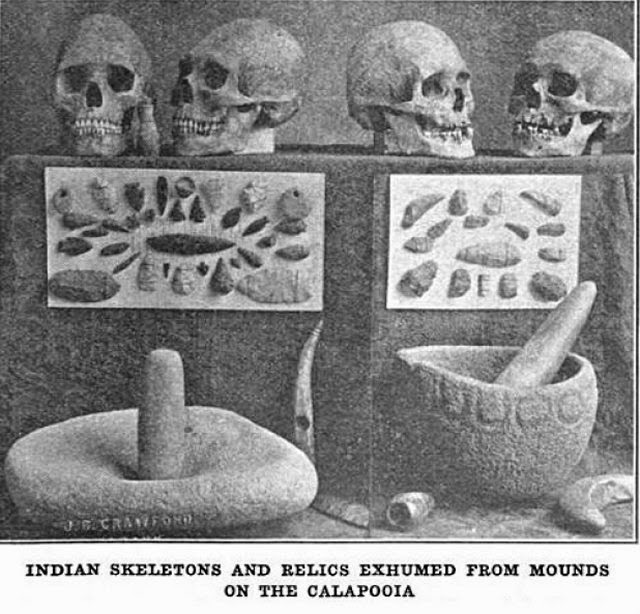
These are skulls, arrows, and implements from Lincoln, County Oregon.

The Evening Independent, March 22, 1923
FARMER FINDS GRAVES OF ANCIENT RACE IN OREGON
 Albany, Oregon, March 22 - A burial ground of what is pronounced to be an ancient group of mound builders has been unearthed directly across the river from Albany by Clyde Peacock, a farmer.  Mr. Peacock made the discovery while plowing in a field that has been under cultivation for many years.  The plowshare was caught by a rock which investigation showed was a fine specimen of a mortar.
Digging further, Peaccok unearthed skulls, knives, skeletons, and more mortars and pestles. An area of about 50 feet long and about 20 feet wide has been excavated to a depth of one half to 2 1/2 feet.
J.C. Crawford, the local authority on prehistoric specimens, held the theory that the skeletons were buried shortly after 500 B.C.Mr. Crawford says that the pestles and mortars were buried with their dead, by mound builders. Upon examining some of the best specimens of bones, Mr. Crawford declared that the race had been one of great size and strength.

Monday, February 8, 2021

Giants Graveyard Uncovered in Mansfield, Ohio


Giants Graveyard Uncovered in Mansfield, Ohio


The Mansfield Herald, January 16, 1873
RELICS OF A PAST RACE
       On the farm of Mr. Harrison Whaley, near Mansfield, in this county, is a skirt of woods which possess characteristics of deep interest. About three inches beneath the surface of the entire tract may be found innumerable bones, evidently the remains of an extinct species of the human race.  Several mounds are in the woods, and one which has been partially explored were found skulls and bones, which from their size, must have belonged to a race of beings far more gigantic than the race which now inhabits the earth.  In this mound were also found many clay utensils and arrowhead cut out of solid rock, and pipes of the same material. More giant skeletons in Ohio
      Was the place once a battleground, where the aborigines fought to maintain the glory of their prospective tribes? Or was it a common burial ground? The first seems to be a more plausible theory insomuch as the whole tract, covering at least fifteen acres, has multitudes of human bones but a few inches below the surface It is evident they were never buried, but originally lay exposed to view until the accumulated deposits of time formed the black rich soil which covers them.

Wednesday, February 3, 2021

Smithsonian Reports Two Skeletons as "Very Large" from a South Charleston, West Virginia Burial Mound


Smithsonian Reports Two Skeletons as "Very Large" from a South Charleston, West Virginia Burial Mound

Twelfth annual report of the Bureau of Ethnology to the Secretary of the Smithsonian Institution, 1890-91


Mound 31, where two skeletons described by Smithsonian scientists as "very large" were interred facing each other. Photo from "The Nephilim Chronicles: A Travel Guide to the Ancient Ruins in the Ohio Valley, Zimmerman, 2010.   More giant skeletons in West Virginia www.nephilimgiants.net : Large Skeleton Found in Huntington West Virginia Burial Mound

Mound 31 of this group seems to furnish a connecting link between the West Virginia and the Ohio mounds. It is sharp in outline, has a steep slope, and is flattened on the top; is 318 feet in circumference at the base and about 25 feet high. It was opened by digging a shaft 10 feet in diameter from the center of the' top to the base. After passing through the top layer of surface soil, some 2 feet thick, a layer of clay and ashes 1 foot thick was encountered. Here, near the center of the shaft, were two skeletons, lying horizontally, one immediately over the other, the upper and larger one with the face down, and the lower with the face-up. There were no indications of fire about them.


    Immediately over the heads were one celt and three lance-heads. At the depth of 13 feet and a little north of the center of the mound were two very large skeletons, in a sitting posture, with their extended legs interlocked to the knees. Their arms were extended and their hands slightly elevated, as if together holding up a sandstone mortar which was between their faces. This stone is somewhat hemispherical, about 2 feet in diameter across the top, which is hollowed in the shape of a shallow basin or mortar. It had been subjected to the action of fire until burned to a bright red. The cavity was filled with white ashes, containing small fragments of bones burned to cinders. Immediately over this, and of sufficient size to cover it, was a slab of bluish-gray limestone about 3 inches thick, which had small cup-shaped excavations on the underside. This bore no marks of fire. Near the hands of the eastern skeleton were a small hematite celt and a lance-head, and upon the left wrist of the other two copper bracelets. At the depth of 25 feet, and ou the natural surface was found what in an Ohio mound would have been designated an " altar." This was not thoroughly traced throughout, but was about 12 feet long and over 8 feet wide, of the form shown in Fig. 24.


San Leandro, California Coroner Declares Ancient Giant Skeleton was 8 Feet Tall


San Leandro, California Coroner Declares Ancient Giant Skeleton was 8 Feet Tall


The Washington Times (Washington, D.C.) November 27, 1916
SKELETON OF INDIAN GIANT
Oakland, California, November 27 - A skeletons, believed to be that of an Indian Chief, was discovered by working men engaged in digging gravel on the frank Williams ranch, a mile and half west of San Leandro.  The bones have been taken in charge by Deputy Coroner Morgan, who declared that the size of the thigh bone, it is evident that the skeleton is that of a man at least eight feet tall. The skeleton is to be sent to the anthropological department of the University of California.

Large Human Skeletons Unearthed in San Clemente, California


 Large Human  Skeletons Unearthed in San Clemente, California

California


East Oregonian (Pendleton, Oregon) May 27, 1909
Dig Up Skeleton
     San Clemente, California - The skeletons of five gigantic Indians, unearthed in an Indian burial ground near this place, are being viewed by hundreds of curious spectators today.  Two of the enormous racks of bones are about seven feet long, while the others measure more than six and half.
   The skeleton was found at an unusual depth, under the burial ground of the Timal Indians, who inhabited this section before the invasion of the whites. Trinkets adornaments of unique pattern were found with the skeletons.

Monday, February 1, 2021

Cro-Magnon Skulls Found in Wales Identical to Those in the Ohio Valley Mounds

 Cro-Magnon Skulls Found in Wales Identical to Those in the Ohio Valley Mounds


This type of "primitive" skull type has been found across the northern latitudes associated with the Maritime Archaic.  One of the burial rituals that is found within these primitive giants was the use of red ochre.


Phoenician Origins of Britons and Scots, 1925
   And it was presumably early pioneer stragglers of this same Nordic race at the end of the Old Stone Age who are represented by the "Red Man" of Paviland Cave, in the Gower peninsula of Wales, of the mammoth age, and the "Kneiss Chief " in the stone cist at Keiss (Kassi?) in Caithness. Both of these are interred with rude stone weapons and are of the superior and artistic Cro-Magnon type of early men, which seems to have been the proto-Nordic or proto-Aryan. Indeed, the association of the Keiss chief had a cranium described by Huxley: The Keiss chief is described by Laing as "tall man of very massive proportions", lying extended with face to the East. Huxley found his cranial index was 76, with projecting eyebrow ridges which gave the forehead a "receding" aspect and the forehead "low and narrow."      


                                          Giant Human Remains From The British Isles and Europe

Ohio Giant's Skull Type Found in an England Burial Mound

 Ohio Giant Skull Type Found in an England Burial Mound


The Adena mound builders of the Ohio Valley have the same rounded or brachycephalic skull with prominent brow-ridges and powerful jaws as those the Beaker People of the British Isles. Some of the Adena burial in Ohio were also in stone cists.


Giant skull from the Ohio Valley with the same unique shape as those found in the burial mounds across the British Isles associated with the Beaker People.


The Evolution Of An English Town 1922

A complete skeleton in a stone cist is now lying in a glass case in the museum. It was discovered accidentally by a farmer between Appleton-le-Moor and Spaunton. He had decided to remove a huge stone that had been an obstacle when plowing, and in doing so found that he had removed the top stone of a cist belonging to the early Bronze Age. The man has a round or brachycephalic skull with the prominent brow-ridges and powerful jaws of the Celtic (Beaker People) people, and his right arm was arranged so that the hand was beneath the skull. By his left hand was the food vessel that is now placed on the left side of the skull, and at his feet are a number of small bronze studs or rivets.
These Bronze Age men seem to have had a very general belief in the spirit world, for the dead warrior was buried with his weapons as well as food so that he might be sustained while he hunted in the other world with the spirit of his favorite ax or spear. The museum contains examples of socketed bronze celts and spearheads, as well as an infinite variety of arrowheads, flint knives, stone hammers and celts, and also colored beads and other ornaments.